




Faculty of Veterinary Medicine Organizes a Free Veterinary Convoy in Sheblanga Village, Benha Center
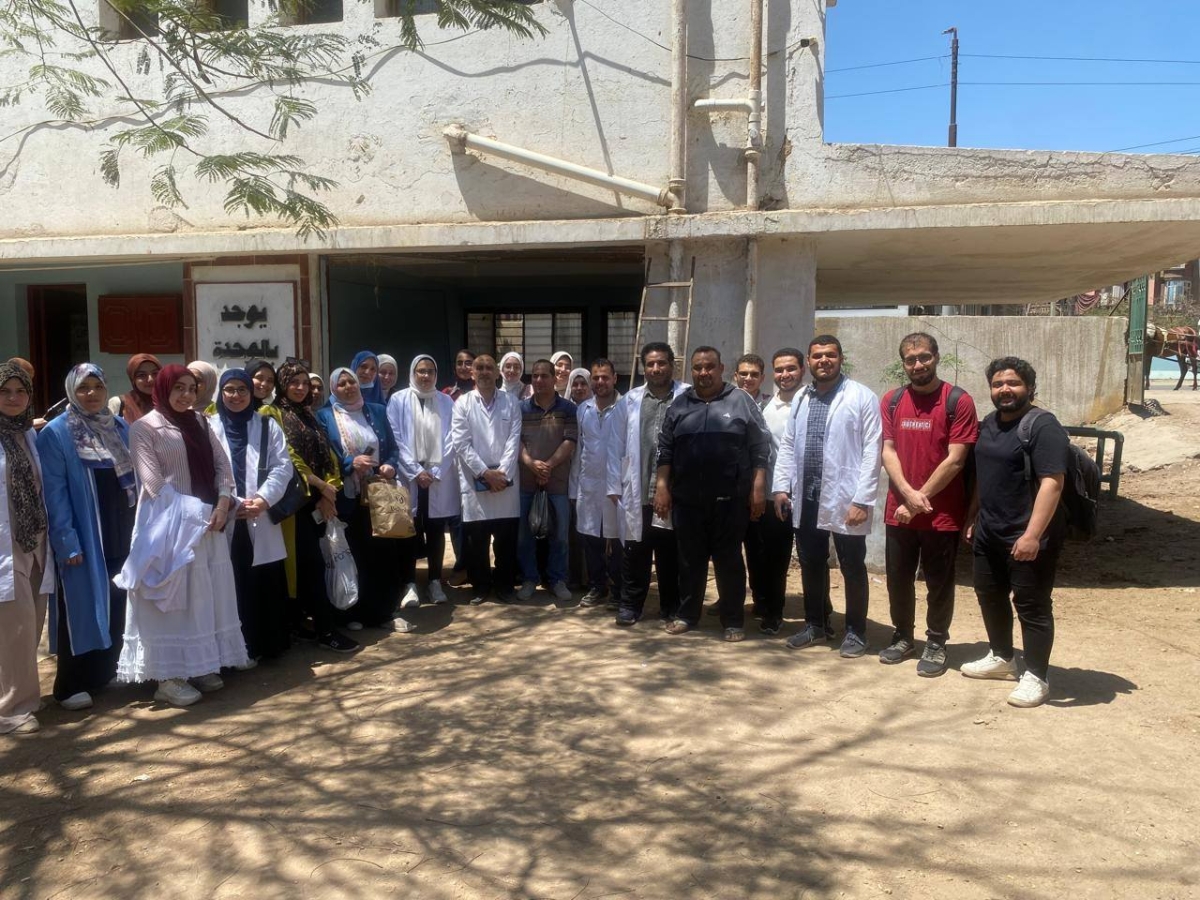
Faculty of Veterinary Medicine Organizes a Free Veterinary Convoy in Sheblanga Village, Benha Center
Under the patronage of Prof. Dr. Nasser El‑Gizawy, President of the University; Prof. Dr. Taha Ashour, Vice President for Community Service and Environmental Development; and Prof. Dr. Amani Abdelrahman Abbas, Dean of the Faculty of Veterinary Medicine, and under the supervision of Prof. Dr. Ehab Mostafa El‑Nahas, Vice Dean for Community Service and Environmental Development, the Faculty of Veterinary Medicine organized a free veterinary convoy in Sheblanga Village, Benha Center, on Thursday, April 23, 2026.
The convoy was carried out in cooperation with Dr. Marionette Nassif, Director of the Animal Health Research Institute – Benha Branch, with coordination by Ms. Rania Moataz, Assistant Secretary‑General of the University for Community Service and Environmental Development, and Prof. Dr. Mohamed Mostafa Kandil, Director of the Educational Veterinary Hospital at the Faculty. This initiative comes within the framework of the college and university plan to serve the surrounding community.
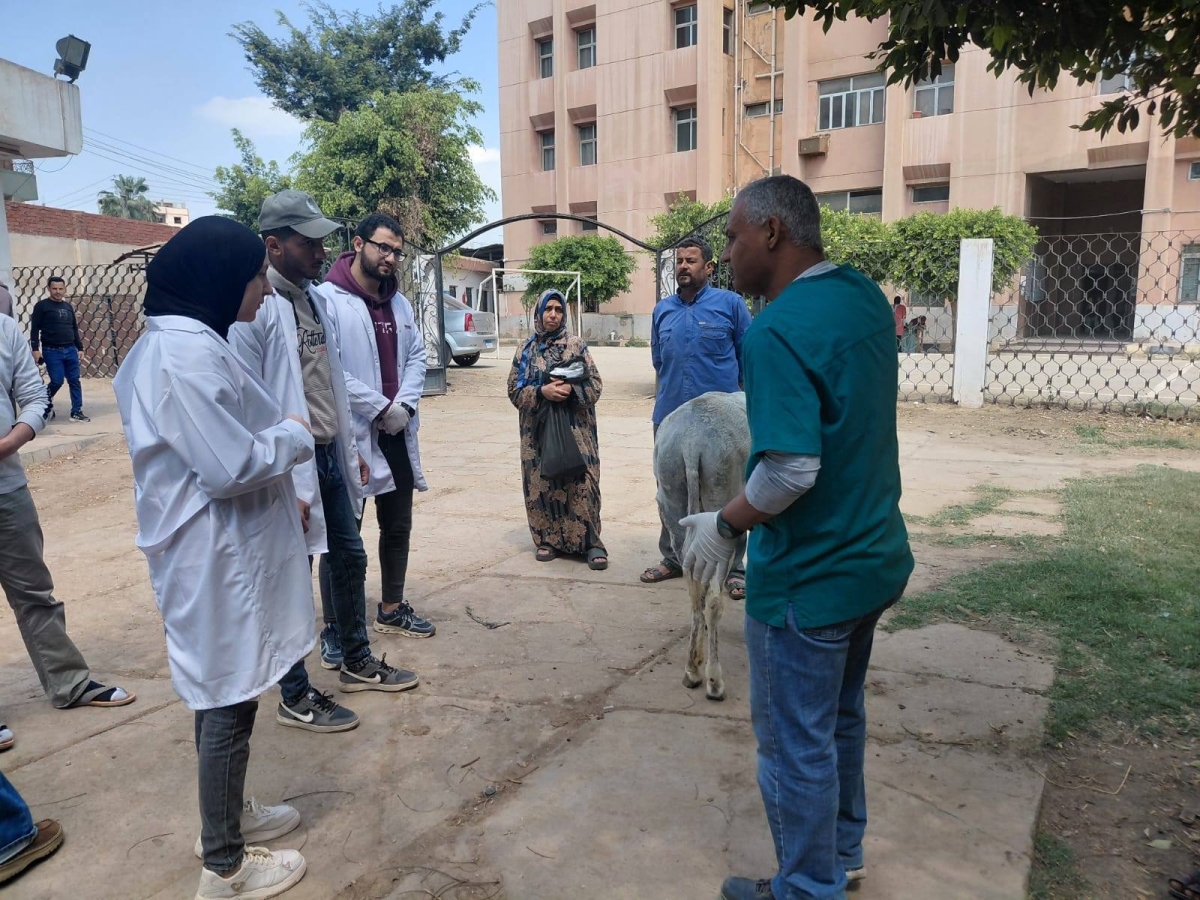
The veterinary convoy aimed to examine various types of animals and provide free medical treatment for all examined cases. During the convoy, veterinary examination and diagnosis were conducted for:
- 61 cases of buffaloes and cattle
- 49 cases of sheep and goats
- 2 cases of equines
In addition, ultrasound examinations were performed on 55 farm animal cases, and 1,043 poultry cases (including chickens, ducks, and pigeons) were examined. The activities also included:
- Performing 13 surgical operations
- Conducting somatic cell count analysis for milk in 6 cases
- Performing microscopic examinations for 18 cases
All medications and treatments were provided free of charge to the examined animals.
The convoy witnessed the active participation of faculty members and teaching assistants from the clinical departments, veterinarians of the Educational Veterinary Hospital, and students of the Faculty, reinforcing the college’s role in community service, practical training, and environmental development.

1