
During the opening of the 7th Student Conference of the Faculty of Veterinary Medicine:
During the opening of the 7th Student Conference of the Faculty of Veterinary Medicine:
“El-Gizawy”: The state is keen on investing in youth and promoting initiatives to regulate behavioral and ethical values within the university
The university president warns against the dangers of irresponsible use of social media and the spread of rumors and misleading content.
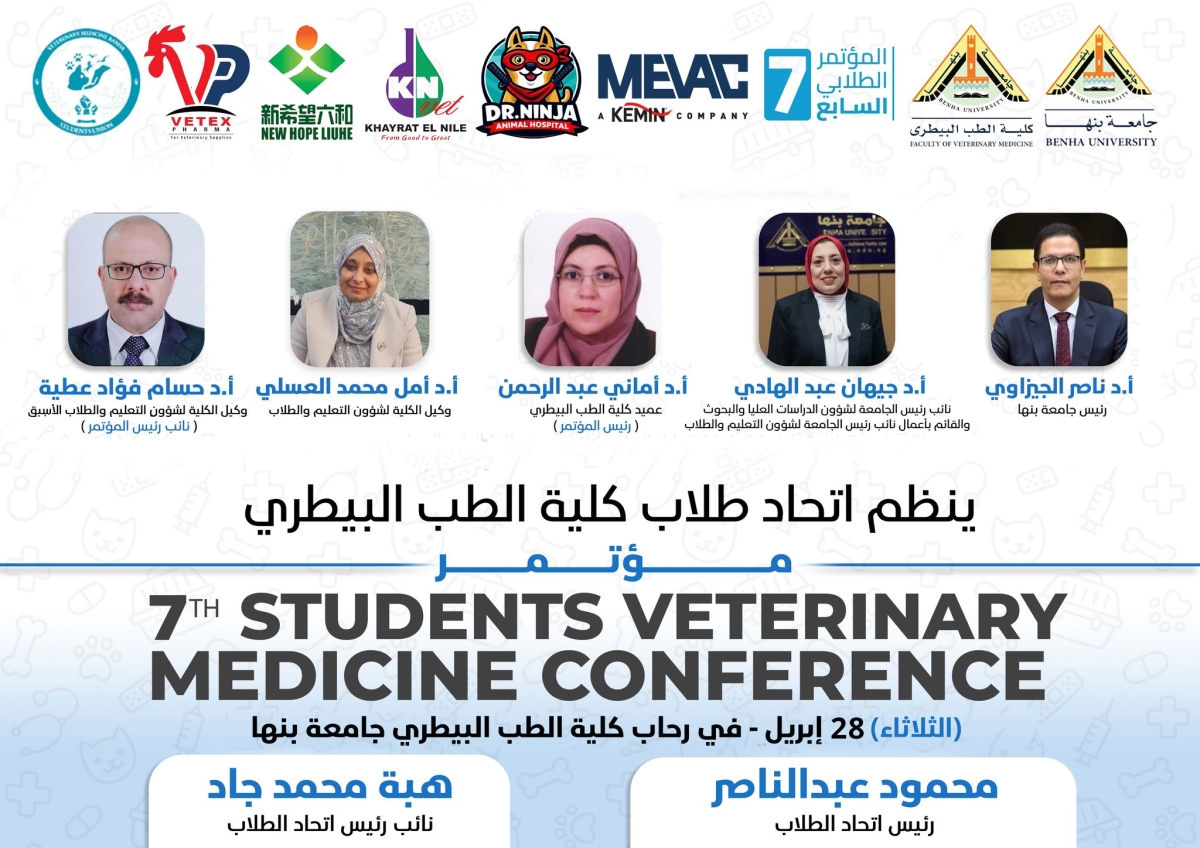
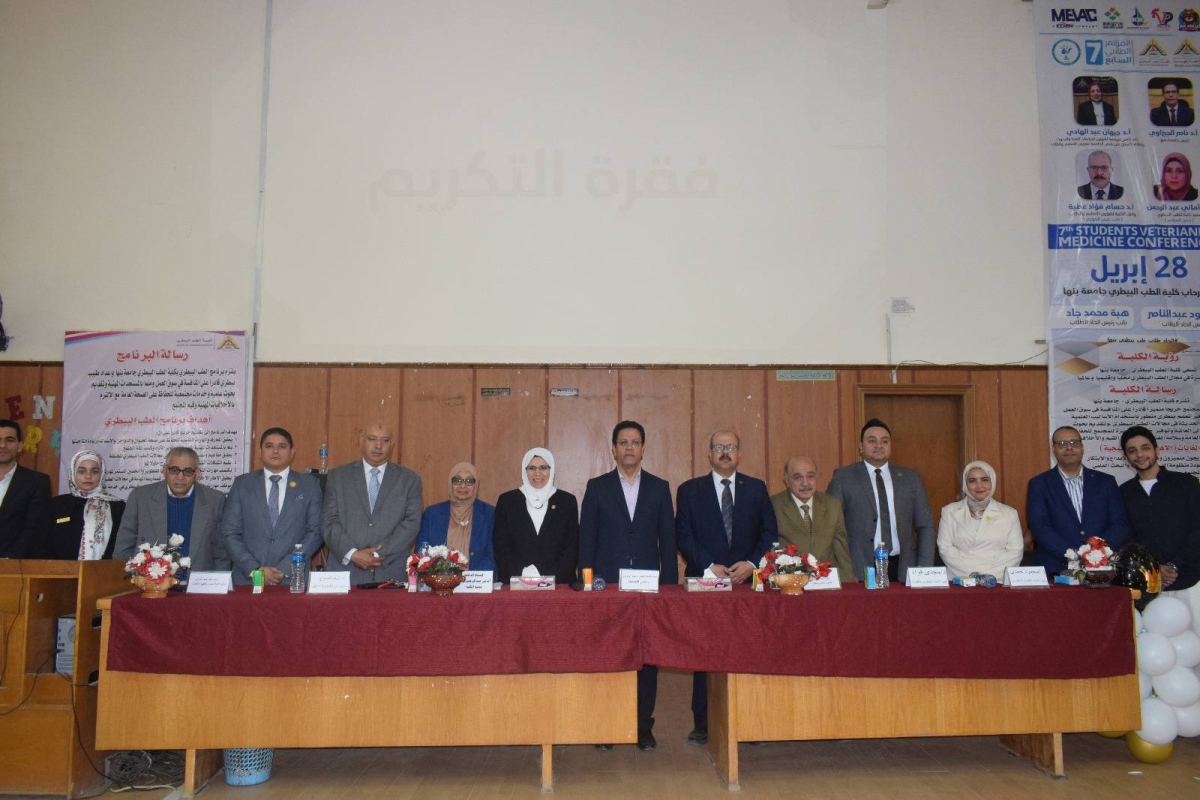
Dr. Nasser El-Gizawy, President of Benha University, inaugurated the activities of the 7th Student Conference of the Faculty of Veterinary Medicine under the title: “From Farm to Hospital… Prevention Starts Here.”
The event was attended by Dr. Amani Abbas, Dean of the Faculty and Conference Chair; Dr. Amal Mohamed, Vice Dean for Education and Student Affairs; Dr. Hossam Attia, former Vice Dean for Education and Student Affairs and Vice President of the Conference; Dr. Magdy Fouad, Head of the Qalyubia Veterinary Syndicate; Dr. Mahmoud Hamdy, Deputy Head of the General Veterinary Syndicate; and Dr. Asaad El-Sabbagh.
The university president stated that organizing the conference comes as part of the Faculty of Veterinary Medicine’s efforts to emphasize the professional and scientific responsibility of veterinarians in combating zoonotic diseases by enhancing epidemiological surveillance skills and biosecurity, and by reinforcing integration between veterinary medicine and public health.
Dr. Nasser El-Gizawy affirmed that the Egyptian state places great importance on youth and is keen on investing in them as the hope and future of the nation.
He pointed out that the university adopts various initiatives aimed at promoting behavioral and ethical values, stressing the role of academic advisors in supporting and guiding students, helping them overcome academic and personal challenges, and strengthening the role of psychological and social support units within faculties to provide educational guidance and mental health support.
He also warned of the dangers of irresponsible use of social media, including the spread of rumors, negative energy, and misleading content that can affect young minds. He noted that society is engaged in a “battle of awareness,” which is the most important tool in confronting surrounding risks. He urged students to use artificial intelligence applications responsibly and professionally in scientific research, and to avoid relying on them in matters related to human and social relationships.
For her part, Dr. Amany Abbass stated that the conference comes amid ongoing momentum driven by political leadership directives to review academic programs and ensure their alignment with labor market needs. She added that the veterinary job market is rapidly evolving, and veterinary education must keep pace by linking academic programs to real-world demands to produce graduates capable of protecting animal wealth, understanding the economics of animal, poultry, and fish production, and possessing employability and entrepreneurship skills.
She further noted that entrepreneurship has become a strategic option for veterinary graduates, who can establish their own projects such as specialized veterinary clinics, feed companies, aquaculture projects, diagnostic laboratories, and other ventures in the veterinary field.
Dr. Hossam Fouad Attia, former Vice Dean for Education and Student Affairs and Vice President of the Conference, stated that the conference themes include the responsibilities of veterinarians in epidemiological surveillance, slaughterhouses, and food safety; preventing the transmission of diseases from animals to humans; studying diseases that originate in animals and their control within farms and animal facilities; and reviewing systems of isolation, disinfection, herd management, and reducing the chances of infection transmission.